Application lab for industrial bonding and sealing
Do you need to select or verify a solution for industrial bonding or sealing?
In G A Lindberg’s application lab, we help you evaluate materials, adhesives, surface pre-treatment and processes based on technical and production requirements.
Through structured laboratory testing, we develop and verify solution alternatives with the aim of providing you with documented decision support for an application that meets the requirements of the end product and works efficiently in production.
Contact us about your application
From requirements specification to verified solution
A reliable bonded joint involves more than simply selecting the right adhesive. Materials, surface treatment, application method, production process and the requirements placed on the finished product all need to work together.
We therefore begin by analysing your application and the conditions that may affect the result. This includes reviewing:
- how the production process is designed
- which tests have already been carried out
- which problems or challenges exist
- which technical requirements apply to the end product and the application
- which production-related requirements need to be met
Based on this analysis, our technical specialists develop suitable solution alternatives that can be verified through laboratory testing.
When can a laboratory test be relevant?
Laboratory testing can provide valuable support both during product development and when an existing product or production process needs to be changed.
A laboratory test may, for example, be relevant when you:
- are developing a new product that requires bonding or sealing
- need to select or verify a new adhesive or sealing material
- are changing the design, materials or production process
- need to increase production volumes
- are experiencing quality or adhesion problems
- need to meet new environmental requirements
- want to verify a solution before introducing it into production
Laboratory testing can be used to verify both that the finished product meets its quality requirements and that the application provides the right conditions for cost-efficient production.
How a laboratory test is carried out
1. Application analysis
Together, we review the need, problem definition, materials, production process and the technical and production requirements that the solution needs to meet.
2. Proposed solutions
Based on the analysis and our experience, we develop a number of possible solutions. Where appropriate, initial screening tests may be carried out to evaluate the alternatives.
Together, we then decide which solutions should be tested further.
3. Preparation and pre-treatment
Material samples are prepared before testing. This may include:
- cleaning
- adaptation of sample format
- conditioning
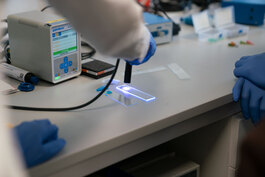
- plasma pre-treatment
- primer application
- sanding
The type of pre-treatment used depends on the material, application and test specification.
4. Test bonding and verification
The selected alternatives are prepared and bonded for testing. Adhesion tests are then carried out according to the agreed specification.
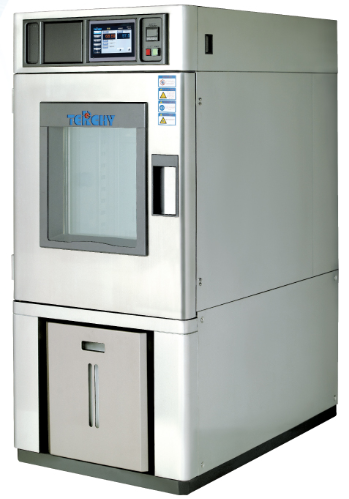
Where required by the application, testing can also be carried out in a climate chamber.
5. Report and technical recommendation
Once testing has been completed, we compile the results and provide our recommended solution.
You then receive a review of the results and the opportunity to discuss questions and next steps with us.
You receive documented decision support
The results of the laboratory test are compiled in a written report.
The report may include:
- the purpose of the test
- the activities carried out
- the test method used
- test results
- G A Lindberg’s recommendation
- important factors to consider before production
- recommendations regarding equipment
- recommendations regarding staff training
This means you receive not only a product recommendation, but also documented technical support for the continued development of the application.
What can a laboratory test contribute to?
Depending on the objectives and requirements of the application, the work can contribute to:
A verified solution for the end product
A bonding or sealing application tested against agreed technical requirements.
A more cost-efficient production process
Material selection and the application process can also be evaluated from a production engineering perspective.
Reduced environmental impact
Environmental requirements can form part of the parameters used when selecting and evaluating a solution.
Consideration of the working environment
The solution can also be selected with consideration for the working environment in the future production process.
Documented test results
You receive a written report documenting the test performed and presenting our recommendation.
From laboratory testing to production
The laboratory test is carried out under controlled conditions in our application lab.
Testing in the customer’s own production environment is not included in the standard laboratory test. If testing or additional support is required in the production environment, this can be planned and quoted separately.
How long does a laboratory test take?
The normal lead time for a laboratory test is 3–4 working weeks, provided that the material samples required for testing are available.
The scope and schedule are determined based on the specific application and the tests that need to be carried out.
Frequently asked questions about our application lab
What can you test in the application lab?
We carry out laboratory testing for industrial applications, primarily within bonding and sealing. The test programme is adapted to the materials, application and requirements that need to be verified.
Can you help us select the right adhesive?
Yes. We begin by analysing the application and then develop suitable solution alternatives that can be tested and verified in the lab.
Can you test different types of pre-treatment?
Yes. Depending on the application, materials can for example be cleaned, sanded or pre-treated using primer or plasma before testing.
Will we receive documentation after the test?
Yes. The results are documented in a report describing, among other things, the purpose, method, results and G A Lindberg’s recommendation.
Can you also help with equipment?
If relevant to the solution, the report may also include recommendations regarding suitable equipment.